
Monday, December 2, 2013


Saturday, November 16, 2013
Getwell services

Offshore Medicals is the medical assessment booking platform. We facilitate the medical assessments that are required by the offshore industry to ensure an individual’s fitness to work within a specialist environment. To know more about our services, pls visit our site.

Friday, October 4, 2013

Sunday, September 1, 2013

Saturday, August 10, 2013
Breastfeeding Protects Babies

- Early breast milk is liquid gold – Known as liquid gold, colostrum (coh-LOSS-trum) is the thick yellow first breast milk that you make during pregnancy and just after birth. This milk is very rich in nutrients and antibodies to protect your baby. Although your baby only gets a small amount of colostrum at each feeding, it matches the amount his or her tiny stomach can hold.
- Your breast milk changes as your baby grows – Colostrum changes into what is called mature milk. By the third to fifth day after birth, this mature breast milk has just the right amount of fat, sugar, water, and protein to help your baby continue to grow. It is a thinner type of milk than colostrum, but it provides all of the nutrients and antibodies your baby needs.
- Breast milk is easier to digest – For most babies — especially premature babies — breast milk is easier to digest than formula. The proteins in formula are made from cow’s milk and it takes time for babies’ stomachs to adjust to digesting them.
- Breast milk fights disease – The cells, hormones, and antibodies in breast milk protect babies from illness. This protection is unique; formula cannot match the chemical makeup of human breast milk. In fact, among formula-fed babies, ear infections and diarrhea are more common. Formula-fed babies also have higher risks of:
- Necrotizing (nek-roh-TEYE-zing) enterocolitis (en-TUR-oh-coh-lyt-iss), a disease that affects the gastrointestinal tract in preterm infants.
- Lower respiratory infections
- Asthma
- Obesity
- Type 2 diabetes
Some research shows that breastfeeding can also reduce the risk of Type 1 diabetes, childhood leukemia, and atopic dermatitis (a type of skin rash) in babies. Breastfeeding has also been shown to lower the risk of SIDS (sudden infant death syndrome).
World Breastfeeding Week : 1 - 7 August 2013
Sunday, July 21, 2013
World Hepatitis Day
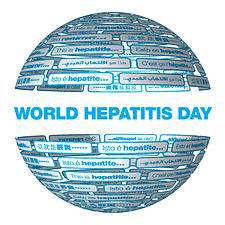
World Hepatitis Day, 28 July 2013
Hepatitis. Know it. Confront it.
Every year on 28 July, WHO and partners mark World Hepatitis Day to increase the awareness and understanding of viral hepatitis and the diseases that it causes.
Hepatitis viruses A, B, C, D and E can cause acute and chronic infection and inflammation of the liver that can lead to cirrhosis and liver cancer. These viruses constitute a major global health risk with around 240 million people being chronically infected with hepatitis B and around 150 million people chronically infected with hepatitis C.
For 2013, the overall theme continues to be "This is hepatitis. Know it. Confront it." The campaign emphasizes the fact that hepatitis remains largely unknown as a health threat in much of the world.
Goal: moving from awareness to commitment and action to address the "silent epidemic" of viral hepatitis
Millions of people are living with viral hepatitis and millions more are at risk of becoming infected. Most people with chronic infection with hepatitis B or C are unaware that they continue to carry the virus. They are therefore at high risk of developing severe chronic liver disease and can unknowingly transmit the virus to other people. Approximately one million people die each year from causes related to viral hepatitis, most commonly cirrhosis and liver cancer.
World Hepatitis Day provides an opportunity to focus on specific actions, such as:
strengthening prevention, screening and control of viral hepatitis and its related diseases;
increasing hepatitis B vaccine coverage and integration of the vaccine into national immunization programmes; coordinating a global response to viral hepatitis.
Although the burden of disease related to hepatitis infection is very high, in most countries, the problem has not been addressed in a comprehensive way for many reasons. These include the fact that most people do not develop any symptoms when they become infected and that they remain free of symptoms often for decades until they develop chronic liver disease. This has largely resulted in "the silent epidemic" we are experiencing today.
Viral hepatitis also places a heavy burden on the health-care system because of the high costs of treatment of liver cancer and liver failure from cirrhosis. In many countries, liver failure from viral hepatitis is the leading reason for liver transplants. Such end-stage treatments are expensive, easily costing up to hundreds of thousands of dollars per person.
The date of 28 July was chosen for World Hepatitis Day in honour of the birthday of Nobel Laureate Professor Baruch Samuel Blumberg, discoverer of the hepatitis B virus.
Subscribe to:
Posts (Atom)